My mind doesn’t think in straight lines. It thinks in connections.
I notice patterns across disciplines, move between the wide view and the smallest detail, and look for the human need inside a systems problem.
01
THE RANGE · AoT
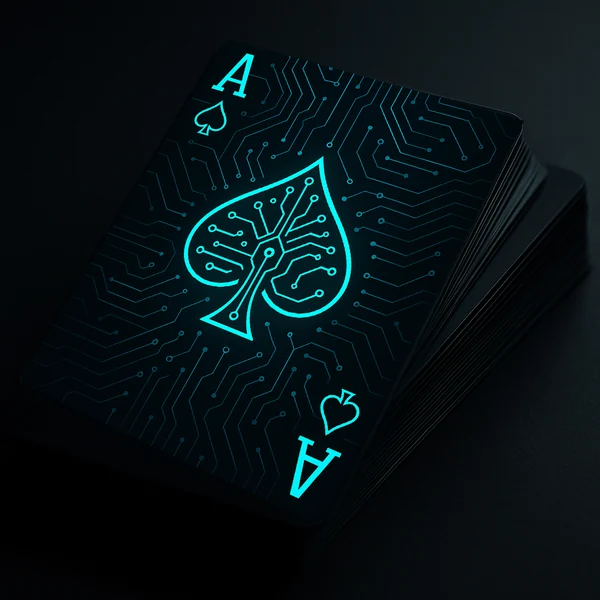
Ace of Trades™
A multidisciplinary way of working: building capability through learning, synthesis, experimentation and execution. It means moving across disciplines with curiosity, then making the useful connection concrete.
In practice: I hold several problem threads in view, learn what each one needs, and combine them into one practical output.
02
THE METHOD · CES
Cyber-Empath Strategist™
The human-centered, analytical and systems-oriented perspective behind the work. Technology can extend our reach; empathy and judgment give it direction.
In practice: parallel processing keeps related signals in view; rapid synthesis turns those signals into a clear next step for people and systems.
HUMAN INSIGHT+SYSTEMS THINKING
A WORKING MAP OBSERVE → CONNECT → DESIGN
01 / OBSERVE
Read the room and the system.
Listen to how people describe the work. Study where information stalls, steps repeat or expectations get lost.
02 / CONNECT
See the relationship between the pieces.
Link details that are often handled separately: people and process, story and data, intention and execution.
03 / DESIGN
Make the insight usable.
Shape the finding into a clear next move: a process, framework, report, product or message.
THE TOOLS OF THOUGHT
Several modes. One point of view.
These are ways I work, not claims of universal mastery. The work is where they become visible.
01
Parallel processing
Hold multiple threads in view, then bring them together around the decision that matters.
02
Pattern recognition
Notice the recurring issue behind a series of seemingly separate problems.
03
Creative + analytical
Use structure to sharpen imagination—and imagination to question the structure.
04
Human-centered systems
Design around the people who have to use the process, not only the process on paper.